

What Nathan Fielder’s You Can See Everything reveals about the delicate balance between ambition and storytelling
I love a visionary, as most communications professionals probably do. We love the founder who sees something the rest of us don’t. The company promising to change how we work, live or interact with the world. The pitch that makes the future feel closer than it actually is.
And there’s a good reason for that. Transformative technologies rarely arrive fully formed. They start with an idea that something could work differently. The challenge is knowing where the vision ends and the reality begins.
That question sits at the center of Nathan Fielder and Lance Oppenheim’s new documentary, You Can See Everything, which follows Theranos founder Elizabeth Holmes in the weeks leading up to her imprisonment.
It’s also a question that should feel familiar to anyone who communicates innovation for a living.
The weight of a single word
One of the documentary’s most revealing exchanges revolves around an almost comically ordinary word: can.
Fielder challenges Holmes about her claims that Theranos’s blood-testing technology could perform a wide range of diagnostic tests. Holmes defends the language, arguing that the technology was capable of doing so with software that had not yet been developed.
Fielder pushes back on the distinction. When someone says a machine can do something, most people assume they mean it can do it now.
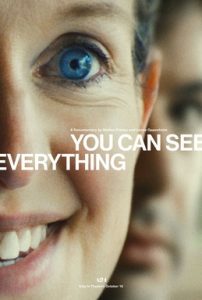
Theatrical release poster
The exchange is simple. It’s two people debating the meaning of a word most of us use without thinking twice. But the implications are much bigger. Think about how often similar language shows up in technology communications.
An AI platform can detect anomalies. A cybersecurity solution prevents attacks. A new diagnostic tool improves patient outcomes. Each statement sounds clear enough. But depending on the evidence behind it, the reality may be much more complicated.
Maybe the AI model has shown promising results in a controlled environment. Maybe the cybersecurity platform reduces the likelihood of certain attacks rather than preventing them altogether. Maybe the diagnostic technology has the potential to improve outcomes but hasn’t demonstrated that benefit in clinical practice yet.
Those are necessary distinctions. They’re the difference between describing what a technology does, what it has actually demonstrated and what its creators believe it could eventually do.
And when those lines start to blur, even unintentionally, the story can get ahead of the innovation.
The innovation storytelling paradox
That’s what makes this so difficult: ambitious storytelling isn’t inherently a problem.
It’s necessary, and something that is core to our work at V2.
Emerging companies have to talk about a future that doesn’t exist yet. They need investors to see the opportunity, customers to understand why a new approach matters and employees to believe they’re building something worth building.
For companies working on genuinely transformative technologies, communicating only what exists today can undersell what they’re trying to accomplish.
The same ambition that makes an innovation story interesting can also make it vulnerable. The bigger the promise, the easier it is to blur the line between potential and proof. That tension is particularly obvious in healthcare and emerging technology.
In healthcare, where innovation can take years of research, testing and regulatory review, the gap between scientific promise and demonstrated clinical benefit matters. A compelling story can attract funding and generate interest, but it can also shape the expectations of patients, providers and other people making important decisions.
AI has its own version of the same problem, only at a much faster pace. Companies are racing to establish themselves as leaders in a market that is changing almost daily, often communicating capabilities that are difficult for audiences to make sense of.
The pressure to stand out is real. So is the temptation to let a successful demo, a product roadmap or an aspirational use case become shorthand for what a technology can consistently deliver today.
Credibility is an innovation advantage
There’s a tendency to think of accuracy and ambition as competing priorities. But that assumes the only way to make innovation compelling is to make it sound inevitable.
Some of the best technology stories are about the problems that haven’t been solved yet, the barriers researchers are working through and the progress being made along the way.
There is a story in the gap between what technology can do today and what it might eventually be able to do.
For communicators, telling that story requires asking hard questions, understanding the evidence behind a claim and, sometimes, pushing back on the language that sounds the most exciting.
Can the technology do this today, or is it a future goal? Has this benefit actually been demonstrated, or is it something the company expects to achieve? What would someone unfamiliar with the technology reasonably take away from this statement?
Those questions don’t get in the way of good storytelling. They make the story more credible.
And credibility is more than a safeguard for reputation. For companies asking the market to believe in something new, it can be a real competitive advantage.
The future is compelling enough without pretending it’s already here
Theranos is an extreme example of what can happen when a company’s story becomes disconnected from what its technology can actually deliver.
But You Can See Everything points to a broader lesson that goes beyond one founder or one failed company.
The way we describe something shapes what people expect from it. And in industries built around the promise of progress, the difference between what is possible and what has actually been proven matters.
The job of a communicator isn’t to temper every bold idea or take the excitement out of innovation. It’s to help companies tell stories that are ambitious without getting ahead of the facts.
Are you ready for a team of storytellers to help shape your company’s narrative? Contact us.