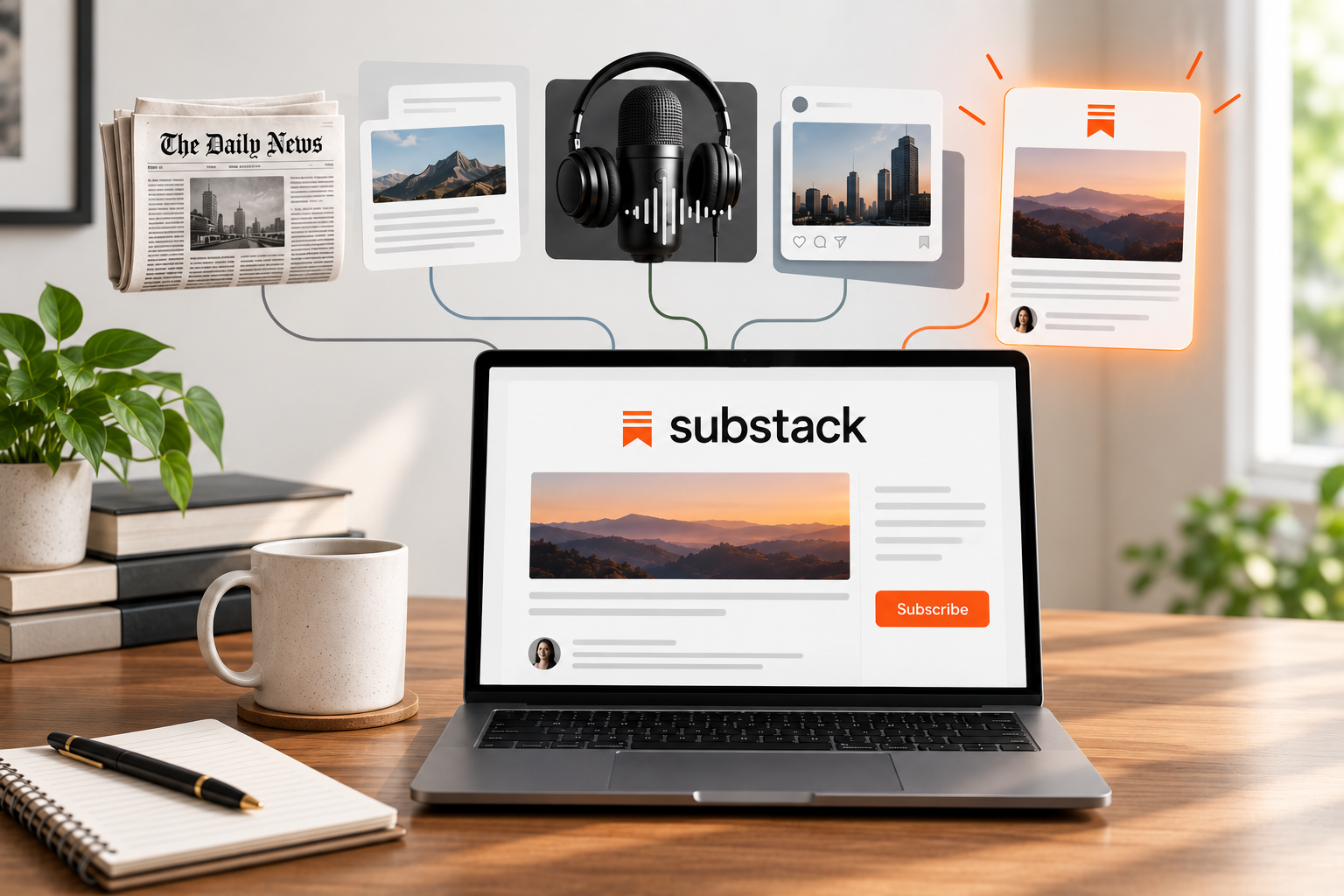
The media landscape is always changing. Blogs disrupted print, podcasts created a new class of influential hosts outside radio and social media is a primary source of news for many. And now, the surge of independent newsletters, often referred to as Substack, is reshaping where audiences get information.
If you’re skeptical, consider the numbers: Substack announced in March 2025 that it had surpassed five million paid subscriptions, up from four million less than four months earlier. Later that year, the company raised $100 million at a reported valuation of $1.1 billion. According to some analyses, the top 10 authors on the platform collectively make more than $40 million a year.
With that much money on the table, these newsletters are only picking up steam. So yes, get ready to refresh your media lists. This shift also means that comms professionals must reconsider what it means to be an influential media outlet and how we build relationships with those at the helm.
Reporters are Making Moves
Shrinking newsrooms have given experienced journalists more reason to build independent platforms of their own. In parallel, platforms such as Substack and Beehiiv have provided them with the infrastructure to operate effectively as independent media companies. Writers publish directly to their audience, build communities and monetize their work on their own schedule and to their own editorial liking.
And it doesn’t stop at newsletters. Substack now supports podcasts, video and community features, and in 2025 expanded livestreaming to all eligible publishers. Creators can use live video to break news, host AMAs and events, interview guests and interact directly with subscribers. With these new additions, independent journalists and creators have the tools they need to build their own brand around their unique expertise, reputation and following.
With that much creative freedom and the infrastructure to support it, we’re increasingly seeing notable journalists take this route. From Alex Konrad (previously of Forbes) to Sharon Goldman (previously of Fortune and VentureBeat), and, more recently, Kevin Roose, who wrapped up his time with the New York Times in August, reporters are banking on audience loyalty: that the audiences they’ve curated over the years will sign up, stay engaged and even pay for their insights.
That creates a lot of opportunities for PR, but only if you know how to position the value of Substack and are willing to put in the time to build meaningful relationships with creators.
A Small but Mighty Following
Communications teams have traditionally placed significant emphasis on reach, unique visitors monthly or domain authority. A feature in the Wall Street Journal can put a company in front of millions of potential readers and carry enormous credibility, and help your search engine rankings, too.
Substack introduces a different challenge: traditional reach and authority metrics still matter, but they are not always the best measures of value for independent newsletters.
Substack audiences tend to be smaller and more niche than those of traditional print and web outlets. In many cases, they go directly into inboxes and may not always be publicly available for AI engines to scrape. However, with this media, it’s a matter of quality, not quantity. You may not reach a lot of people, but chances are you’re reaching the right people, who are, in many cases, paying a subscription and therefore are more engaged. In fact, many B2B newsletters on Substack have open rates between 35–55%, much higher than the 21% average for traditional email marketing.
When evaluating these opportunities, comms professionals should also understand who the subscribers are, the author’s standing within the industry, engagement, social amplification and whether competitors or other respected brands regularly appear in the publication. From there, you can make a well-informed recommendation about whether it’s worth engaging.
Pitch Personalization Matters Even More
Good pitching comes down to offering timely, relevant and useful ideas. But independent media makes personalization even more important.
While it may seem obvious, subscribe before pitching. Read several editions. Understand what the writer covers, what they don’t cover and how they engage with companies and sources. Some may talk only to practitioners; others may focus only on the latest industry research. Paid options may be part of the conversation, but they may not.
No matter the approach, though, it’s incredibly important to remember you are pitching a creator who has put the time and energy into developing a highly curated product for a community they’ve personally built. Put some of your own time and energy into the pitch to show them you get it.
It’s an Addition, not a Replacement
The Journal and the Times aren’t going anywhere any time soon. Major publications will continue to break news, shape business conversations and help companies gain credibility. Independent newsletters and Substack offer another opportunity to reach key audiences and shape industry conversations. Just like podcasts, blogs and other digital-first media, they should be part of any healthy media mix.
Our job is to get our clients into a position where they can influence and lead conversations relevant to their buyers. Today, that includes Substack. Tomorrow, it could be something else. At V2, we’re always keeping a pulse on the way the media is changing. If you need help navigating the changing media landscape and getting in front of the audiences that matter, let’s talk.
Amanda Maguire is a Vice President at V2 Communications, where she develops communications strategies and drives media results for clients across cybersecurity and AI. She specializes in connecting company initiatives to timely news and trends, securing top-tier coverage in outlets including Forbes, The Boston Globe, and Inc., as well as USA Today, Yahoo Finance, and Business Insider.
About V2 Communications
V2 Communications is a top PR firm for tech companies and a leading integrated communications partner focused on B2B technology, AI, climate and energy, healthcare and high-growth brands. The firm delivers integrated communications programs across earned, owned, and paid media, helping companies build market leadership, increase visibility, and drive measurable business results.